

10% Off Your Next Trip. Hurry Up For your new Tour! Book Your Tour
10% Off Your Next Trip. Hurry Up For your new Tour! Book Your Tour


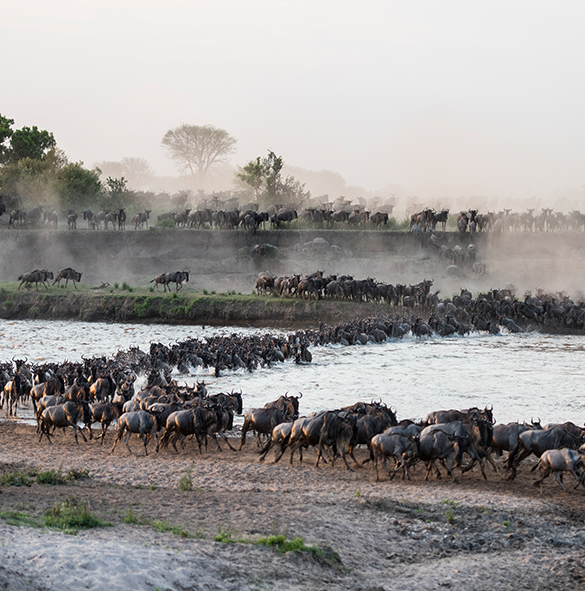
Often described as the greatest wildlife spectacle on Earth, the Great Wildebeest Migration sees vast herds of wildebeest, accompanied by zebras and gazelles, moving in a continuous cycle across Tanzania’s Serengeti Plains and into Kenya’s Maasai Mara. Driven by an instinctive search for fresh grazing and water, the herds follow seasonal rainfall patterns, making the exact timing and location of the migration naturally unpredictable. Rather than a single event, the migration is a year-round journey with no true beginning or end, offering extraordinary wildlife viewing opportunities at different locations throughout the year.
January – March (Calving Season)
From January to March, the herds are typically found on the Ndutu and Southern Serengeti plains, where the short, nutrient-rich grasses provide ideal conditions for calving. This period reaches its peak in February, when hundreds of thousands of wildebeest give birth within a remarkably short timeframe.
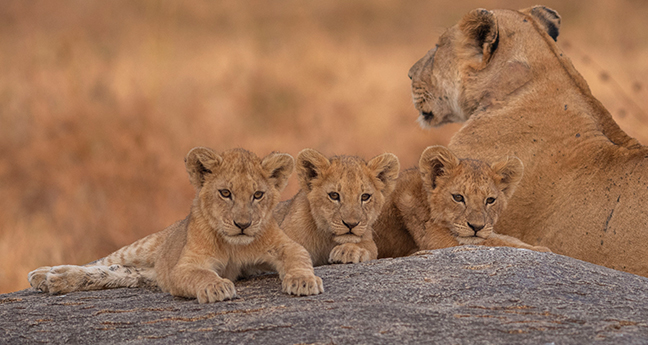
This season offers some of the most rewarding wildlife experiences in the Serengeti. Vast concentrations of animals spread across open plains, and the presence of newborn calves attracts a high number of predators, including lions, cheetahs, and hyenas. As a result, visitors may witness dramatic predator-prey interactions alongside the tender moments of new life, a powerful and unforgettable display of nature in motion.

Migration Timing: April – May (The Journey North)
During April and May, the vast herds begin their gradual movement northwards. As the migration unfolds, the animals often split into different groups, with some traveling through the Central Serengeti woodlands, while others move into the Western Corridor toward the Grumeti River.
This period coincides with the annual wildebeest rut, when large numbers of cows are mated, creating constant movement and energetic interactions within the herds. These months are typically the wettest of the year, and while lush landscapes and dramatic skies dominate the scenery, heavy rains can make tracking the migration more challenging due to muddy and sometimes impassable roads.
Migration Timing: June – July (Grumeti River Crossings)
By June and July, the herds gather along the Grumeti River, where they face their first major river crossings. Although less famous than the Mara River crossings, the Grumeti crossings are equally dramatic and often more intimate, featuring powerful currents and large Nile crocodiles lying in wait.
This stage of the migration is marked by tension and raw natural drama, offering remarkable opportunities to witness the struggle for survival as thousands of animals attempt to cross the river.
Migration Timing: July – August (Mara River Crossings)
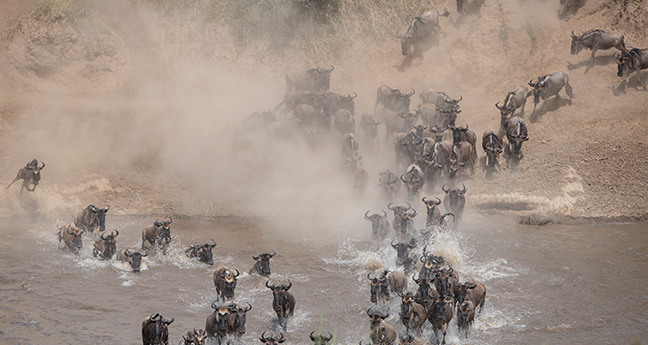
From late July through August, the migration continues north toward Kenya’s Maasai Mara, driven by the promise of fresh, nutrient-rich grazing. To reach these fertile plains, the herds must confront the formidable Mara River, one of the most perilous obstacles of the entire journey.
Here, steep riverbanks, strong currents, and massive crocodiles create intense and unforgettable scenes. Even after crossing successfully, danger remains, as predators such as lions, leopards, and cheetahs closely follow the herds across the plains.
Migration Timing: September – November (Life on the Mara Plains)
Between September and November, the Maasai Mara plains are alive with vast numbers of wildebeest, zebras, and gazelles. The abundance of prey attracts a high concentration of predators, resulting in frequent sightings of hunting and territorial behavior.
This period offers excellent game viewing, with wide-open landscapes, active wildlife, and a sense of constant movement across the plains.
Migration Timing: November – December (The Return South)
As the short rains begin in November and December, the herds start their journey south once again, moving back into the Northern and Central Serengeti. Drawn by fresh new grass, the animals slowly make their way toward the southern plains, where the cycle of the Great Migration begins anew.

The connections we build with our clients underscore the importance we place on thoughtful, attentive service, making each journey truly unforgettable.
We go beyond expectations to design your perfect Tanzania safari, offering expert local insight and attentive support at every stage of your journey. Through thoughtfully curated, tailor-made itineraries, our travelers consistently award us a 98% satisfaction rating.
“I had an unforgettable experience with Sons & Daughters Safaris during my visit to Tarangire National Park. From my very first conversation with Mrs. Hellen Biseko, the Managing Director, everything was handled with incredible professionalism and warmth. She took the time to understand my preferences, explain all details clearly, and ensure the day was perfectly organized.”

“Every aspect of planning to accommodations were flawless. I couldn’t asked for a better experience with the staff. I was able to see the art gallery and the jewelry store prior to and after the safari. The driver himself was very experience with knowing about the various animals in the park, learned something new about the big 5!! A very enjoyable experience.”

“My trip with Son and Daughters was nothing short of once in a Lifetime Experience, We had a very good time in the Crater since I saw Four of the Big Five African animals, I hoped I would have seen a Rhino as well but maybe next time, The Driver Omary was very friendly and he knew everything about the wild, another place I had a very good time was with hadza people.”
“Hellen is just amazing! From the very first contact the communication was so nice and friendly. She tried everything to fulfill our ideas and made great travel itineraries! Her services were most professional & on time. She is very reliable and very serviceoriented and does her job wirh a lot of passion. We highly recommend her to anyone who wants a unique experience.
“Tanzania is an absolutely amazing destination, and our experience with Sons and Daughter Safaris made it even more unforgettable. We spent six days on safari, and every single moment was a memory in the making. We had the chance to see a wide range of incredible animals,..”
